
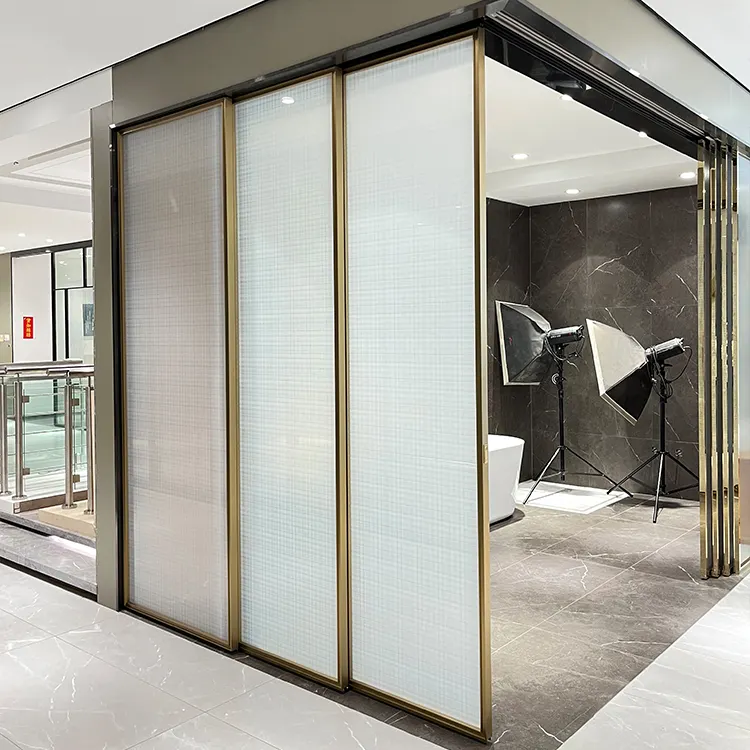
Modern workplace design is always looking for the ideal balance: it promotes community building and natural connection while also giving the required focus and solitude for intense work. Originally praised for encouraging openness and cooperation, the open-plan office frequently falls short on the latter, generating noise and distraction that ironically impede production and concentrated teamwork. Under continual talk and ambient noise, employees battle with confidential phone calls, focused activities, and even successful meetings. Now enter high-performance glass office soundproof doors, a clever architectural feature meant to give the visual connectedness of open spaces with the necessary acoustic isolation for both individual attention and successful, private cooperation. These doors show a deliberate change in office architecture and show that it is feasible to improve teamwork without compromising that essential quiet element.
The Open Plan Challenge: Noise and the Cost to Collaboration
The open-plan office was meant to be a noble means of removing physical obstacles to promote communication and free flow of ideas. But in many such environments, the reality is a symphony of keyboard clicks, phone calls, casual talks, and office bustle generally. This ubiquitous noise pollution makes it harder for people to focus, therefore undermining output and raising stress. More importantly, it prevents vital kinds of teamwork. Sensitive dialogues needing discretion are not feasible. External noise or the desire to silence voices to prevent upsetting others dilutes focused team sessions where difficult issues are resolved. The very interactions meant to improve cooperation, brainstorming sessions, one-on-one check-ins, client calls become causes of dissatisfaction and ineffectiveness, underscoring the immediate requirement of aural management inside the visually open environment.
The Transparency Advantage: Visibility and Connection
Here is where the “glass” component becomes quite important for preserving the open office environment. Glass office soundproof doors maintain sightlines across the office unlike opaque walls that create visual silos and disconnect coworkers. This openness encourages ongoing accessibility and community. Team members housed in a glass-enclosed meeting room or private office yet clearly link themselves to the larger team. By letting colleagues know if someone is free or involved in a targeted conversation, this visibility might inspire spontaneous exchanges. It encourages transparency and trust, so supporting the idea that even if someone may be in a quiet zone, they are still very much a part of the shared workspace and gain from natural light flow and a less constrained psychological environment.
Conclusion
Glass soundproof doors have real power only in their harmony. They give both visual connectivity and audio control at once, not demand a decision between them. This special mix immediately improves cooperation by providing adaptable venues for several kinds of collaborations that were once sacrificed in an entirely open environment. Teams can convene in a quiet, enclosed conference room for concentrated brainstorming free from creating noise that disturbs others. Confidential calls or video conferences in private booths let staff members avoid leaving the office floor or worrying about being overheard. Those who need great concentration for difficult activities can withdraw to a quiet, glass-fronted office where they remain physically appealing but sonically secluded. This results in a dynamic, adaptable office environment where casual, visual connection coexists with the ability to enter a quiet, private zone whenever the task calls for focused collaboration or concentrated individual effort, so improving communication, output, and a harmonic workplace environment.