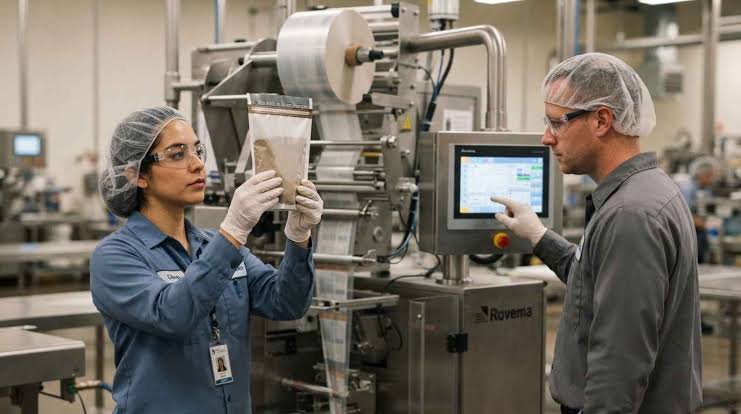
Cosmetic packaging is responsible for many more things than just making a product look good on a retail shelf. It safeguards the formulation, aids safe handling, maintains product quality and affects the customer’s experience of the brand. If a bottle leaks, a pump breaks down or a pump cap snaps, a good product can easily become a customer complaint.
The problem is more difficult when cosmetics are produced and sold on a large scale. Packaging can be filled, capped, stored, transported, exposed to temperature fluctuations, vibrated, and handled by consumers multiple times. A failure risk can be added to each stage. To ensure product performance, it is therefore crucial to be aware of these risks and to carry out packaging testing as a result.
Common Cosmetic Packaging Failure Modes
There are several ways cosmetic packaging can fail, and some of these issues are not always apparent. Some defects are noticed at the time of production, others are only identified after weeks of storage or transport. Typical examples include leakage, cracked containers, loose closures, blocked pumps, damaged threads and incorrect component assembly.
That’s where Cosmetics packaging inspection comes into play. The structured inspection process examines packaging from several angles and not just appearance. Inspectors may check the dimensions, closure fit, surface defects, print quality, sealing performance and compatibility of the components to find issues before the product reaches the customer.
Testing Seal Integrity and Leakage Performance
The most important cosmetic packaging characteristic is its seal integrity. If the container is not tightly closed, the formulation may leak, evaporate, dry out, or become contaminated. This risk is particularly important for products like creams, serums, lotions, oils and liquid cosmetics.
There are a number of different testing methods that can be employed depending on the package design. Vacuum testing can be used to detect leakage around closures and seals, and pressure testing can be used to determine if containers are secure under controlled pressure conditions. For some packages, dye penetration tests can also be performed. The goal is simple: to ensure the package is properly sealed for the duration of its life.
Evaluating Closure Performance
Closures are caps, pumps, spray mechanisms, droppers, flip tops, etc. that regulate access to the product. Their performance can have a direct impact on usability. Too tight can annoy consumers and too loose can lead to leaks or contamination issues.
Tests should include mechanical performance and repeatability. For instance, if a pump is required to pump a fixed quantity of product for a series of actuations. The screw cap should not be too tight, yet not too loose. These tests give manufacturers an idea if a closure will function in normal consumer use.
Material Compatibility Testing
The packaging material should be compatible with the cosmetic product itself. Packaging can interact chemically with a product, which may have an impact on the product’s appearance, smell, feel, stability, or packaging function. The problem can be especially significant if the formulations include oils, solvents, acids, fragrances or other reactive chemicals.
Compatibility testing is typically a means of exposing packaging components to the proposed formulation under controlled conditions. Changes in the sample, like swelling, discoloration, cracking, deformation, or loss of mechanical strength, can then be examined. Data from testing under various temperatures and storage conditions can be used to gain further insight into long-term behavior.
Visual and Dimensional Inspection Techniques
Not all packaging problems can only be solved with sophisticated lab equipment. Visual inspection is still a valuable initial control. Inspectors will be able to detect scratches, dents, discoloration, molding defects, printing errors, missing components, and inconsistent finishes. These issues do not necessarily impact on the ability to function but can have a strong impact on perceived product quality.
Dimensional checks provide another layer of control. Measurements can be done to verify that bottles, caps, pumps, liners and other parts are kept within a certain tolerance. This can even cause a slight difference in dimension to impact the fitment. In high volume manufacturing these tolerances help to minimize assembly issues and better consistency from one manufacturing batch to the next.
Designing a Reliable Packaging Testing Program
A robust testing programme should be representative of the risks posed by the packaging design. Any one test will not be applicable to all cosmetic containers. The failure modes of a glass serum bottle, aerosol container and flexible cosmetic tube are quite different.
A practical program can be a mix of the following:
- Leakage testing for seal and closure integrity testing.
- Torque testing for cap opening and closing.
- Drop test for impact resistance.
- Compression testing for assessment of packaging strength when stacked.
- Compatibility testing for possible interaction between formulation and packaging materials.
- Visual examination for cosmetic and manufacturing faults.
- Testing of pumps, sprays, droppers and dispensing systems to ensure they are functioning correctly.
Multiple methods provide a more comprehensive packaging performance assessment. It also assists manufacturers to relate specific failure modes to suitable corrective actions.
Challenges in Packaging Quality Control
The most difficult part is to keep consistency in the production batches. Unexpected variation can be caused by changes in resin composition, glass composition, molding conditions, molding machine settings, or supplier components. Initial tests may result in a packaging design that works well, but a manufacturing change could cause it to behave differently.
There is another layer of uncertainty with transportation. Products can vibrate, stack, cool and warm and be handled repeatedly before consumers. Wherever possible, therefore, laboratory testing should simulate realistic distribution conditions. Testing packaging in ideal conditions can leave out significant risks.
Conclusion
Attractive design is not the only thing that matters when it comes to reliable cosmetic packaging. It requires engineering analysis, controlled manufacturing, functional testing, and continuous quality monitoring. The integrity of the seal, the seal’s performance, material compatibility, dimensions, and the durability of the product during transport must all function in harmony to ensure product protection and provide a consistent customer experience.
A detailed Packaging quality inspection program assists manufacturers to uncover these weaknesses prior to products entering the distribution network. Through a combination of visual checks and functional, mechanical and compatibility testing, companies can decrease packaging failures, limit customer complaints, and increase confidence in products.