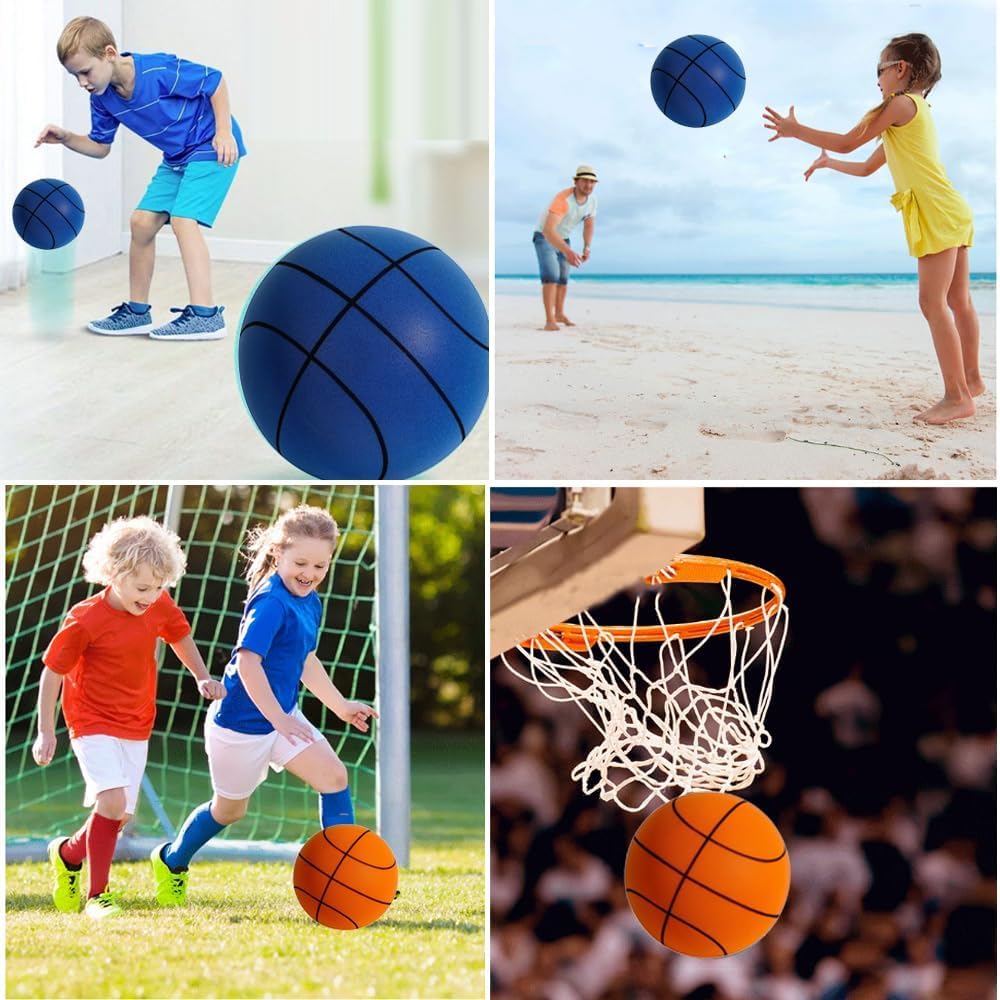
In recent years, training equipment designed for controlled environments has seen measurable growth. According to youth sports participation data, over 60% of young players now practice skills indoors at least twice a week. This shift has increased demand for tools that reduce noise while maintaining performance quality. A silent soccer ball answers this need by allowing repeated practice without disturbing households, classrooms, or shared residential spaces. Its design focuses on minimizing sound impact while still delivering realistic ball response, making it especially suitable for youth development programs.
How Does Noise Reduction Improve Practice Frequency?
Practice consistency is one of the strongest predictors of skill improvement. Statistical learning models in sports suggest that higher repetition leads to up to 35% faster mastery of core techniques such as passing, ball control, and foot coordination. Noise, however, often limits practice duration indoors. A silent soccer ball significantly lowers sound output on impact, removing this barrier. As a result, young players can train more frequently, increasing total weekly touches and accelerating development in a measurable way.
What Makes Silent Soccer Balls Suitable for Indoor Environments?
Indoor training spaces vary widely, from living rooms to school halls. Traditional soccer balls can cause excessive bounce and loud impact sounds when used indoors. Silent soccer balls are engineered with specialized outer layers and internal structures that absorb energy more efficiently. This results in reduced rebound height and controlled roll behavior. Data from indoor sports safety studies shows that lower rebound equipment reduces accidental damage by nearly 40%, making these balls a safer option for enclosed areas.
Can Silent Soccer Balls Support Technical Skill Development?
Technical development in youth soccer focuses heavily on first touch, close control, and passing accuracy. Performance analysis indicates that drills emphasizing short-range ball interaction contribute to over 70% of foundational skill growth in players under 14. Silent soccer balls are optimized for these drills. Their predictable movement allows players to focus on technique rather than managing excessive speed or bounce. This consistency supports data-driven training plans that emphasize repetition and precision.
Are Silent Soccer Balls Effective for Different Age Groups?
Youth development stages require age-appropriate equipment. Statistical breakdowns of training effectiveness show that players aged 6–9 benefit most from lightweight, low-impact balls, while ages 10–14 require slightly higher resistance for strength adaptation. Silent soccer balls are typically designed to balance softness with durability, fitting a wide age range. This adaptability makes them suitable for progressive training programs where equipment needs remain consistent across growth stages.
What Role Do Silent Soccer Balls Play in Confidence Building?
Confidence is a critical yet often overlooked metric in youth sports. Surveys among youth athletes reveal that nearly 50% feel more comfortable practicing skills alone when environmental pressure is reduced. Silent soccer balls contribute to this by allowing discreet practice without drawing attention or causing disruption. This psychological comfort leads to longer practice sessions and a more positive association with training, which statistically correlates with higher long-term participation rates.
Why Are Silent Soccer Balls a Practical Choice for Modern Training Setups?
Modern youth training increasingly blends structured coaching with independent practice. Equipment that supports both settings is highly valued. Silent soccer balls align well with this trend by enabling flexible use across home, school, and indoor facilities. From a statistical perspective, tools that increase practice accessibility can raise total annual training hours by up to 25%. Over time, this added exposure translates into measurable improvements in coordination, technique, and overall game understanding.
What Do the Numbers Suggest About Long-Term Impact?
When evaluating long-term development, cumulative practice time and quality are key indicators. Silent soccer balls enhance both by removing environmental constraints and supporting focused drills. Data-driven training models suggest that even a 10-minute daily increase in effective practice can lead to significant skill gains over a single season. For youth players aiming to build strong fundamentals indoors, a silent soccer ball represents a practical, performance-oriented solution backed by measurable training benefits.