
Introduction
Vital signs and physical assessment are foundational nursing skills. Students need to learn how to collect accurate observations, recognize changes, and communicate their findings appropriately. While classroom instruction provides essential theoretical knowledge, hands-on practice is equally important.
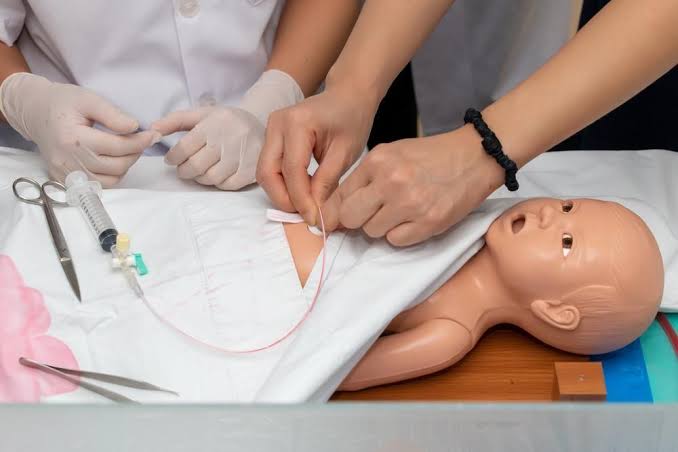
Medical simulation manikins give nursing students a controlled environment where they can practise assessment techniques repeatedly. When combined with instructor guidance and realistic scenarios, manikins can make physical assessment training more engaging and practical.
Why Use Manikins for Assessment Training?
Learning physical assessment solely through demonstrations or textbooks can limit students’ practical experience. Manikins provide a consistent subject that students can use while learning how to perform different assessment procedures.
The ability to repeat an assessment without the pressure of working with a real patient can be particularly valuable for beginners.
1. Practising Blood Pressure Measurement
Blood pressure measurement is a basic but important nursing skill. Students need to learn how to position equipment correctly, follow the procedure taught by their programme and record results accurately.
Simulation manikins designed for assessment training can provide opportunities to practise these steps repeatedly. Instructors can observe students and identify issues with equipment placement, technique or documentation. Students can then repeat the exercise and apply the feedback they receive.
2. Learning Pulse and Respiratory Assessment
Students also need to develop accurate techniques for assessing pulse and respiration. Using a manikin can help students practise locating appropriate pulse points and using timing methods correctly. Respiratory assessment can also be incorporated into simulation exercises.
Educators can create scenarios where students must collect observations and report their findings as part of a broader patient assessment.
3. Temperature and Oxygen Saturation
Temperature and oxygen saturation are other important components of routine vital-sign assessment. Students can practise using thermometers and pulse oximeters while learning how to document their findings.
Depending on the capabilities of the simulation equipment, instructors may also be able to create different patient scenarios that require students to respond appropriately to changes in observations. The emphasis should remain on following the procedures and clinical guidelines taught by the student’s programme.
4. Developing a Systematic Assessment Approach
One of the major benefits of simulation is that it allows students to practise following a consistent assessment sequence. Rather than treating each vital sign as an isolated task, instructors can create scenarios requiring students to assess a simulated patient systematically.
Communicate important observations to the instructor or appropriate health care professional. This approach helps connect individual skills to broader patient-care responsibilities.
5. Building Communication Skills
Physical assessment is not purely technical. Communication is also an important part of patient care. Simulation allows students to practise explaining what they are doing, maintaining professional communication, and responding appropriately during an assessment.
Instructors can evaluate communication alongside technical performance, creating a more complete learning experience.
6. Supporting Clinical Confidence
Students may feel nervous when performing assessment procedures for the first time. Regular practice with manikins can help reduce this uncertainty.
Because simulation provides a controlled environment, students can make mistakes, receive feedback, and try again. Repetition can gradually improve familiarity with equipment and assessment procedures.
Conclusion
With realistic scenarios, instructor supervision, and regular feedback, manikin-based training can complement classroom education and help students become more comfortable with essential nursing assessment skills before applying them in real clinical environments.

